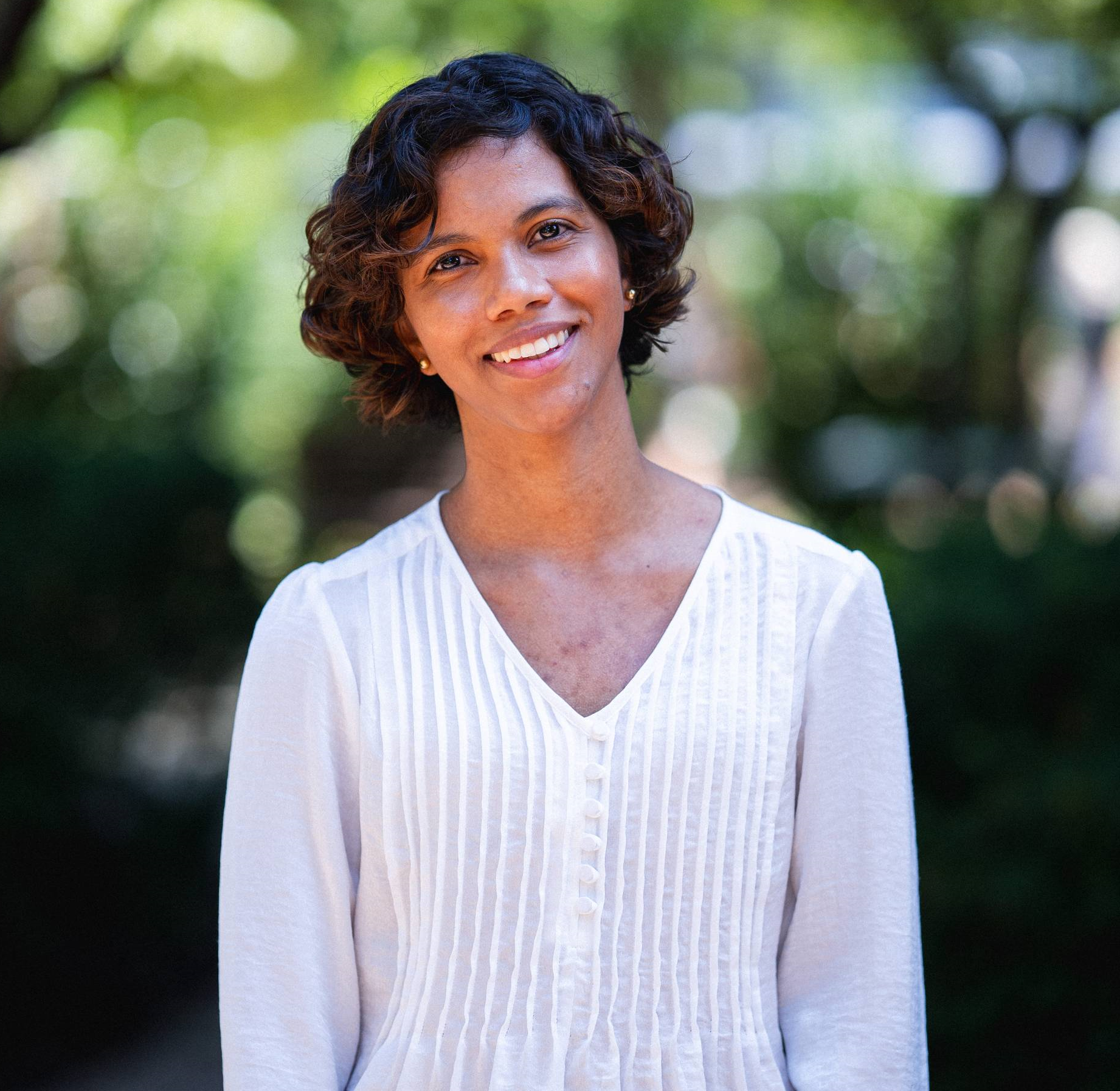
Leticia
Claro Oliveira
Welcome! I am a Ph.D. Candidate in Political Science at Washington University in St. Louis, and a Dean's Distinguished Graduate Fellow. I study comparative politics, with a regional focus on Latin America. My research investigates how political institutions shape access to power and how contextual conditions, particularly criminal violence, limit what formal rules and public policy can achieve.
Before joining WashU, I earned a B.A. in Social Sciences and an M.A. in Political Science from the University of São Paulo in Brazil.
My previous work may be cited under my full name, Maria Leticia Claro de Faria Oliveira, or some variations. While I proudly carry all my family names, my recent academic publications appear under the shortened version, Leticia Claro Oliveira.
Research
Dissertation
Who Governs? Institutions, Parties, and Access to Power — My dissertation examines how electoral institutions shape who gains access to political power, both within parties and across governing coalitions, and the consequences of these arrangements for service delivery.
Working Paper
Winning to Lose: How Electoral Rules Shape Cabinet Appointments and Public Service Delivery in Presidential Systems
Working Paper
Keeping It in the Family: Kinship Networks as a Quota Compliance Strategy in Brazil
Working Paper
Criminal Violence and the Representation of Women in Politics
Other Projects
Book Project
When Mobility Becomes Security: Criminal Governance and Civilian Migration in Rio de Janeiro
Research Project
Global Armed Violence and Health
Working Paper · Awarded ASU - BRIDGS Emergent Scholar Fellow (Spring 2026)
The Politics of Missing Data: How Democratization Transitions Explain Gun Data Transparency in Latin America
Publications
The Relationship between Ideology and COVID-19 Deaths: What We Know and What We Still Need to Know
The Effect of State-Level Social Distancing Policy Stringency on Mobility in the States of Brazil
Should I Stay or Should I Go? Embracing Causal Heterogeneity in the Study of Pandemic Policy and Citizen Behavior
Foreign Policy and the Legislature in President Lugo's Paraguay
The article assesses the association between political and institutional factors and the capacity of President Lugo to approve his legislative initiatives, disaggregating by themes of domestic politics and foreign policy. Through a logistic model, we find a president strongly constrained by the legislature in domestic affairs but with sufficient conditions to approve the foreign policy agenda.
The Executive and Legislative Relations in Paraguay under Fernando Lugo (2008–2012)
This paper analyzes the legislative process in the National Congress of Paraguay during Lugo's administration. Results show that strategic state areas such as foreign policy, finances, and administration received massive congressional support, while the president's inability to legislate in sensitive electoral themes stressed the troubled relationship between president and congress.
Teaching
| Spring 2026 | Seminar in Comparative Politics: Political Behavior Graduate POLSCI 5190-02 · Teaching Assistant · Washington University in St. Louis |
| Fall 2025 | Topics in Politics: Authoritarian Politics Undergraduate POLSCI 3103-01 · Teaching Assistant · Washington University in St. Louis |
| Summer 2025 | Python Camp Graduate Teaching Assistant · Washington University in St. Louis |
| Spring 2025 | Comparative Politics Workshop Graduate POLSCI 5074 · Teaching Assistant · Washington University in St. Louis |
| Spring 2025 | Introduction to Comparative Politics Undergraduate POLSCI 102B · Teaching Assistant · Washington University in St. Louis |
| Fall 2024 | Approaches to Comparative Politics Graduate POLSCI 510 · Teaching Assistant · Washington University in St. Louis |
| Spring 2024 | Introduction to Political Theory Undergraduate POLSCI 106 · Teaching Assistant · Washington University in St. Louis |
| Fall 2023 | Topics in Politics: Latin American Politics Undergraduate POLSCI 326B · Teaching Assistant · Washington University in St. Louis |
| Fall 2019 | Quantitative Methods in Research in Political Science IV Graduate FLP0468 · Teaching Assistant · University of São Paulo |